Namibians remain forever indebted to the people of Mongolia
It was great to have an interview with Honorable Emma Inamutila Theofelus, who is a young, 29-year-old Namibian woman who serves as a Member of Parliament and the Minister of Information and Communication Technology in the Republic of Namibia.
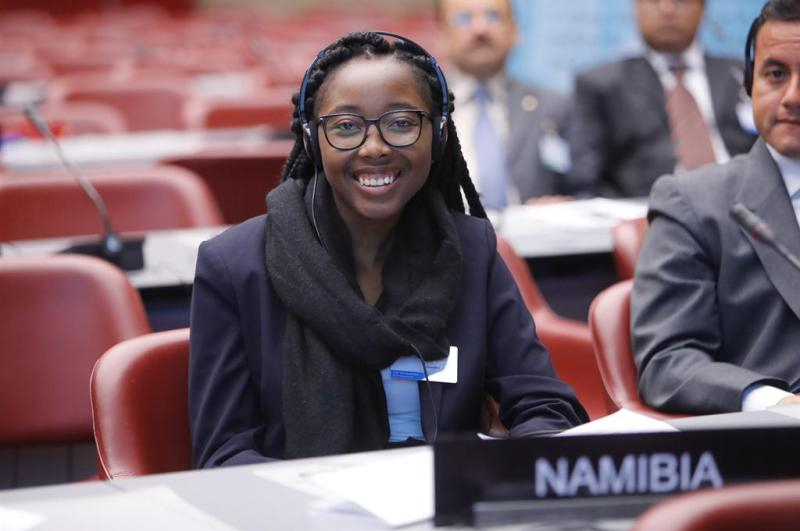
You are recognized as the youngest cabinet minister in Africa. What inspired you to enter politics, and how has your journey been so far? Why does youth participation in governance matter?
Well, there is one younger Minister on the African continent from Botswana, however, indeed yes, I joined formal politics at the age of 23 years old when the late President Dr. Hage G. Geingob appointed me to Parliament and further appointed me as Deputy Minister of Information and Communication Technology in March 2020. Before that, I had just graduated law school and worked at a private firm before transition to work in the Ministry of Justice in the International Relations department.
I have generally been quite an active child and young person all my life. I started youth advocacy at 13 years old when I advocated for children’s rights and petitioned the National Assembly to pass the Child Care and Protection Bill in 2010 which eventually became an Act of Parliament in 2015. As a youth activist, I was always policy adjacent when I was elected Junior Mayor of the City of Windhoek and later as the Deputy Speaker of the Children’s Parliament. All these roles where complimented by my active participation as a high school and university debater. Soon I found myself in national student politics and party politics. This is a much-summarized version of my journey but all of it points to why it is important to have youth participation in governance issues.
Young people view the world a different way and can offer multiple insights older generations do not always see, but more importantly, youth participation gives young people visibility AND a voice.
Namibia and Mongolia are among the most sparsely populated countries in the world. How do you see the role of a national digital strategy in bridging the digital divide and improving public services? Do you believe young people bring a unique perspective to digital innovation compared to older generations?
A National Digital Strategy (NDS) is a big stepping stone in bridging the digital divide for any country bur more especially for sparsely populated countries such as ours. In the case of Namibia, the country has a contrasting topography that includes forests, two deserts and multiple mountain ranges where connectivity must still reach the people. We managed to launch our NDS about a year and a half ago and it has so far assisted us in accelerating our broadband goals. Young people were an integral stakeholder in putting our NDS together and I am happy to say that their participation has enriched our NDS in being relevant for a couple more years.
Your leadership symbolizes remarkable progress in gender representation. Namibia’s President, Vice President, Speaker of the National Assembly, one‑third of cabinet members, and nearly half of parliamentarians are women. What is the recipe for this success, and what lessons can other nations learn from Namibia’s experience?
Indeed Namibia has done remarkable work in mainstreaming gender representation into public office.
The ruling party (SWAPO Party of Namibia) took a bold step almost 20 years ago to send an equal number of men and women to parliament (zebra-style).
This boosted the representation of women in both houses of parliament immensely. It is because of the acceptance of men in the ruling party structures and their support that women such as our President Dr. Netumbo Nandi-Ndaitwah could be nominated as a party candidate and eventually be directly elected by the Namibian people as our first female president.
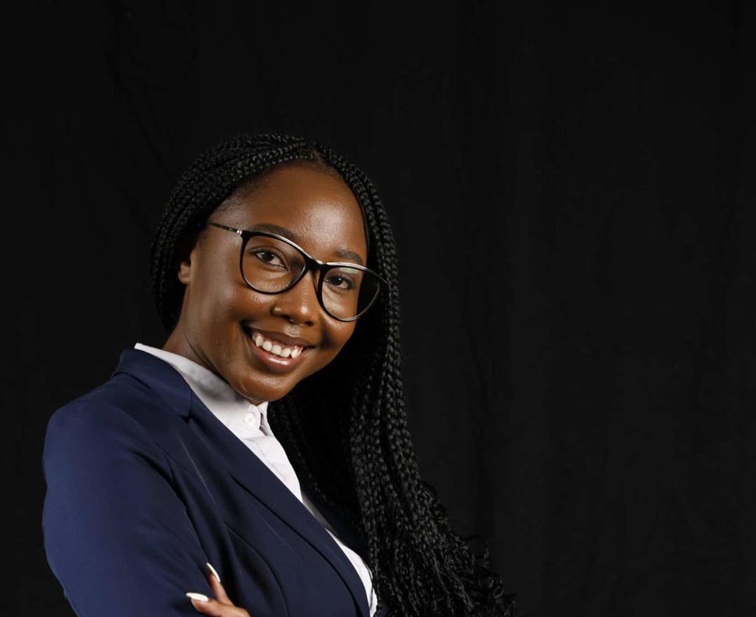
It is of course not a walk in the park because as a country, we need to continuously protect the gains we have made and create more avenues for young women for example to enter into politics. Moreover, gender representation doesn’t end only in the highest office in the land, it needs to start at the root of society in communities, professions that were only considered suitable for men, small businesses, large corporations in the country and even in faith based organizations. Every aspect of a country needs to embrace that women and girls are an integral part of the fabric of a country and they too deserve a seat at any table.
You were selected as a Young Global Leader by the World Economic Forum. What legacy would you like to leave in Namibia through your work in ICT and public service?
It was very encouraging to be selected as a WEF YGL 2025. Legacies in my opinion are created every day. Every person I bring online in Namibia will be my legacy, every older person who becomes digitally literate during my time of service will be my legacy, every child who gains an education online because the internet is accessible and affordable during my time in Office will be my legacy. Ultimately, if at the end of my term I leave Namibia with sound laws, policies and plans for the future; compounded by accessible, affordable and quality connectivity today – then I would be happy to say that that is my legacy at MICT.
How can smaller nations like Namibia and Mongolia amplify their voices and influence in global digital forums?
Smaller nations like ours that often are overlooked need to continuously document our lived realities and that of our citizens, by doing so, we can present real information backed up by real data at global digital fora about the direction the global digital space needs to head into without leaving our nations behind. This, along with persistent and continuous presence at these fora, speaking with unified voice will position us better to get the recognition that we too deserve.
I learned that Mongolia supported Namibia’s independence in the late 1960s by providing financial assistance to the SWAPO party. This touched me deeply. Could you share more about this historical connection with Mongolians today?
Yes, SWAPO during our long and bitter liberation struggle from colonial Germany and Apartheid South Africa was assisted by many goodwill countries such as Mongolia.
Every cent or donation went to refugee camps, orphaned children’s education in countries like Cuba and strengthened the Liberation Army to fight another day until our independence in March 1990. Namibians are forever indebted to the friends that assisted us in gaining our freedom so that today we can talk about a free Namibia that can chart its own digital future.
How do you envision future cooperation and synergy between Namibia and Mongolia, particularly in ICT and innovation?
I see our two countries learning from each other in order to strengthen our ICT spaces and foster strong collaboration in innovations particularly our young people. Who knows, perhaps a peer-to-peer exchange might be the most befitting.
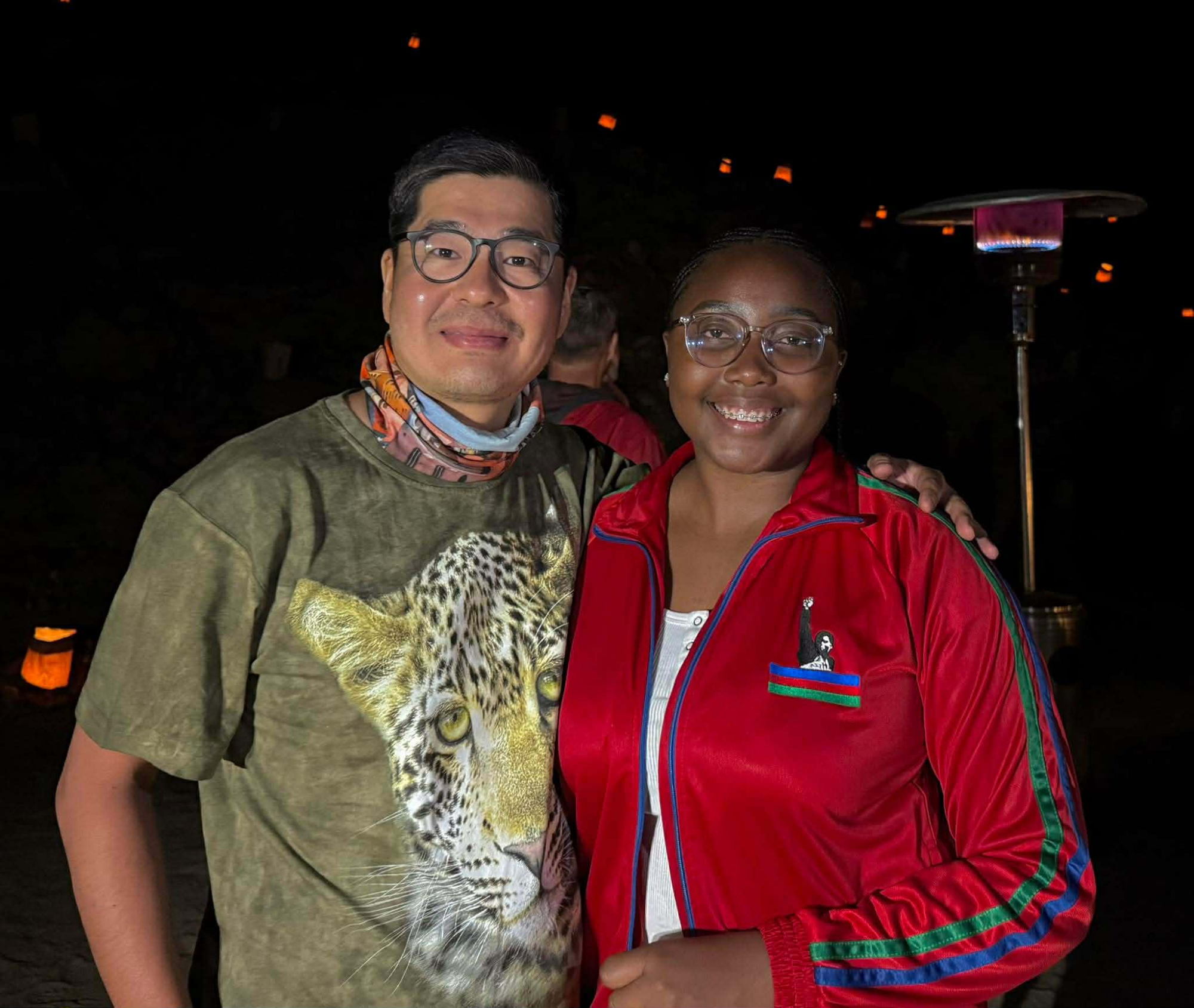
In your view, what defines Namibian identity today, and how should it evolve in the future?
The Namibian identity is rooted in sacrifice, in service, in kindness and in bravery. It is ever evolving and I can only hope that it evolves for the better and grows our nation more united from strength to strength through all generations to come.